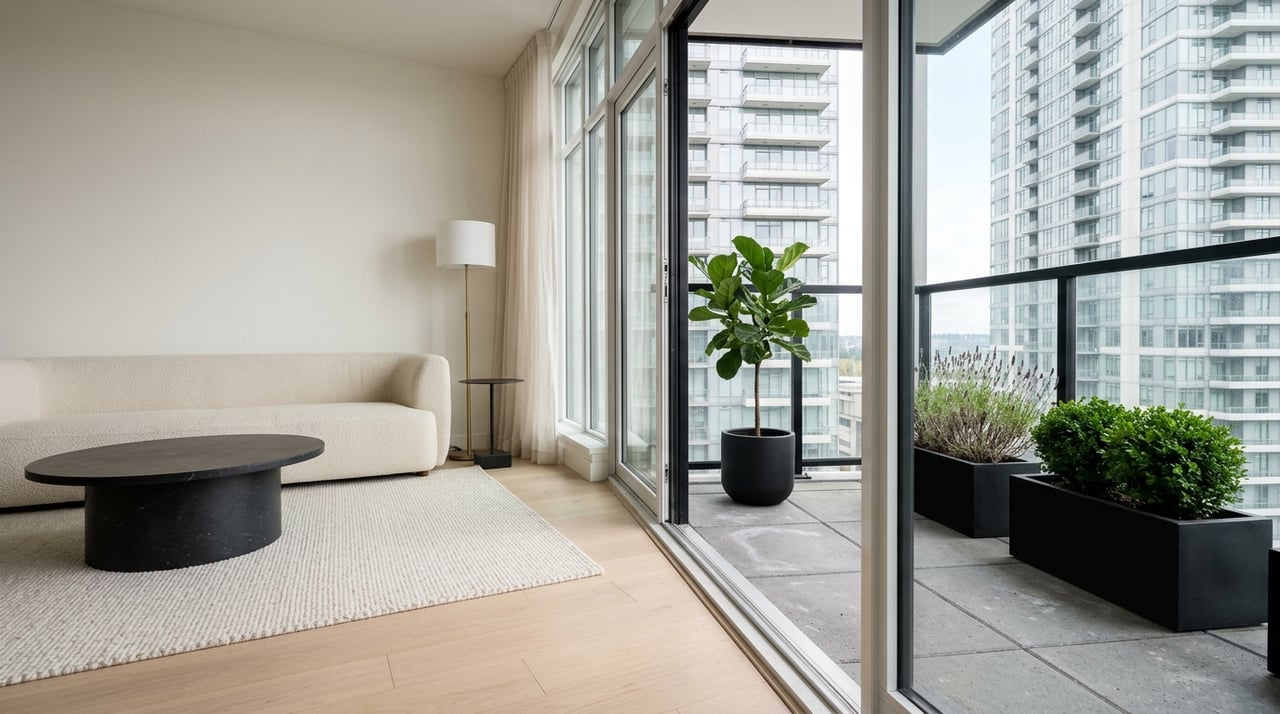
Mississauga Condo vs Townhome: Choosing Your First Home
April 2, 2026
April 2, 2026
Buying your first home in Mississauga can feel like a balancing act. You want a place that fits your budget today, supports your lifestyle tomorrow, and does not surprise you with costs you did not plan for. If you are deciding between a condo and a townhome, this guide will help you compare prices, ownership costs, and day-to-day tradeoffs so you can make a confident first move. Let’s dive in.
If affordability is your top concern, recent Mississauga numbers give you a useful starting point. According to TRREB’s February 2026 market data, average resale prices were $514,936 for condo apartments, $722,369 for condo townhouses, and $898,510 for freehold attached or row townhouses.
That price gap matters for first-time buyers. In simple terms, condo apartments are usually the lowest entry point, condo townhouses sit in the middle, and freehold townhomes often require the largest budget.
There is another important piece here. TRREB’s condo market report noted that condo apartment prices were down 5.1% year over year in Q4 2025, which gave buyers more negotiating power in that segment. If you are trying to get into the market without stretching too far, that can make condos especially worth a closer look.
A condo apartment is usually the easiest path into homeownership from a price standpoint. It can also appeal to buyers who want less hands-on exterior maintenance and access to shared building features, depending on the property.
In Mississauga, condos are often concentrated in the city’s higher-density areas. The City of Mississauga’s planning framework directs the highest densities to the Urban Growth Centre, including the Downtown Core, Fairview, Cooksville, and the Hospital area.
A condo townhouse gives you a townhouse-style layout, but it is still part of a condominium corporation. That means you own your unit and share ownership of common elements, rather than owning the property in the same way as a freehold home.
This option often appeals to buyers who want more separation, more levels, or a more house-like feel than a condo apartment. But you still need to review condo fees, rules, and building financials carefully.
A freehold townhouse gives you more ownership control, but it also puts more maintenance responsibility on you. According to CMHC’s home buying guide, freehold ownership is common for townhouses, and the owner is responsible for the costs and maintenance of the property.
This can be a strong fit if you want more independence and are comfortable managing upkeep yourself. The tradeoff is that freehold townhomes had the highest average price in Mississauga’s recent snapshot.
In Mississauga, your budget can go much further or much less far depending on where you buy. The same home type can look very different in price from one area to another.
Recent TRREB community reports show that City Centre averaged $516,232 in Q3 2025, while Port Credit averaged $942,000 for condo apartments and $1.322 million for condo townhouses in Q1 2025. East Credit averaged $794,000 for condo townhouses and $559,000 for condo apartments in Q2 2025, while Churchill Meadows averaged $639,000 for condo townhouses and $528,000 for condo apartments in Q3 2025.
What does that mean for you? It means you should not decide based on property type alone. A condo in one Mississauga area may cost close to a townhome in another, so your search should always combine home type, location, and total monthly cost.
The biggest mistake many first-time buyers make is comparing homes by list price only. Your real affordability picture depends on what it costs to carry the home every month.
CMHC’s affordability guidance says the true cost of ownership includes mortgage principal and interest, property taxes, heating costs, half of condo fees, plus maintenance and insurance. That is why a lower-priced condo with high monthly fees is not automatically the cheaper option in practice.
For condo apartments and condo townhouses, CMHC explains that monthly condo fees help maintain common property and often contribute to the reserve fund. Fees may also cover things like visitor parking, storage, amenities, or other shared features.
Before you buy, make sure you know exactly what the fees include and whether they are likely to rise. A slightly higher purchase price with more predictable monthly costs may be more comfortable than a lower price with heavier ongoing fees.
With a condo apartment or condo townhouse, some exterior and common-area maintenance is handled through the condo corporation. With a freehold townhouse, more of that responsibility falls directly on you.
That does not automatically make one better than the other. It simply means you need to be honest about your time, comfort level, and monthly cash flow.
Insurance is another detail that first-time buyers sometimes underestimate. CMHC notes that property insurance must be in place on closing day, and condo buyers need unit and contents insurance as part of their recurring costs.
If you are buying a condo apartment or condo townhouse, due diligence is a major part of the process. You are not just buying the unit. You are also buying into the financial health and rules of the condominium corporation.
According to CMHC’s condominium buying guidance, the key items to review include:
If you are considering a newer condo, CMHC also notes that new condominiums are often protected by third-party new home warranty programs. That can be another factor to compare if you are deciding between resale and new construction.
Your savings plan can influence whether a condo or townhome makes more sense. A stronger down payment or lower closing costs may expand your options.
The federal down payment rules currently require 5% on the first $500,000, 10% on the portion above $500,000 up to $1.5 million, and 20% at $1.5 million or more. If your down payment is under 20%, mortgage loan insurance is typically required.
That means the jump from a condo apartment price point to a townhouse price point can affect more than your mortgage amount. It can also change your minimum cash needed to buy.
The federal government says the First Home Savings Account allows $8,000 of annual participation room and a $40,000 lifetime contribution limit. The Home Buyers’ Plan now allows qualifying buyers to withdraw up to $60,000 from an RRSP.
If you meet the eligibility rules, these tools can be combined for the same home. For many first-time buyers, that combination can make the difference between settling for a smaller option now and buying a home that fits a little longer.
Ontario also offers a first-time homebuyer land transfer tax refund of up to $4,000. The province states that no land transfer tax is payable on the first $368,000 of an eligible first home.
That can help reduce closing costs and preserve more of your savings for moving expenses, insurance, or early home setup costs.
If you are still stuck between a condo and a townhome, use this decision framework.
When you compare listings, focus on the details that shape your daily life and long-term costs. A smart first purchase is not just about what you can buy. It is about what you can comfortably own.
Use this checklist as you narrow things down:
In Mississauga, the right answer often comes down to what matters most to you: the lowest possible entry price, a more house-like layout, or more ownership independence.
Your first home does not need to be perfect. It needs to be a smart fit for your budget, your routine, and your next few years. In Mississauga, condos often offer the easiest entry point, condo townhouses can provide a strong middle ground, and freehold townhomes usually offer more control at a higher price.
If you want help comparing real numbers, reviewing monthly carrying costs, and narrowing down the right Mississauga neighbourhoods for your goals, Team Durrani can guide you through the process with clear advice and a detail-driven approach.
Stay up to date on the latest real estate trends.

Whether you're buying, selling, or investing, Team Durrani is ready to provide the expertise and dedication you deserve. Contact us today to begin a professional, transparent, and results-driven real estate journey.
Team Durrani
Address
17-1075 North Service Rd. W
Oakville, Ontario, L6M 2G2