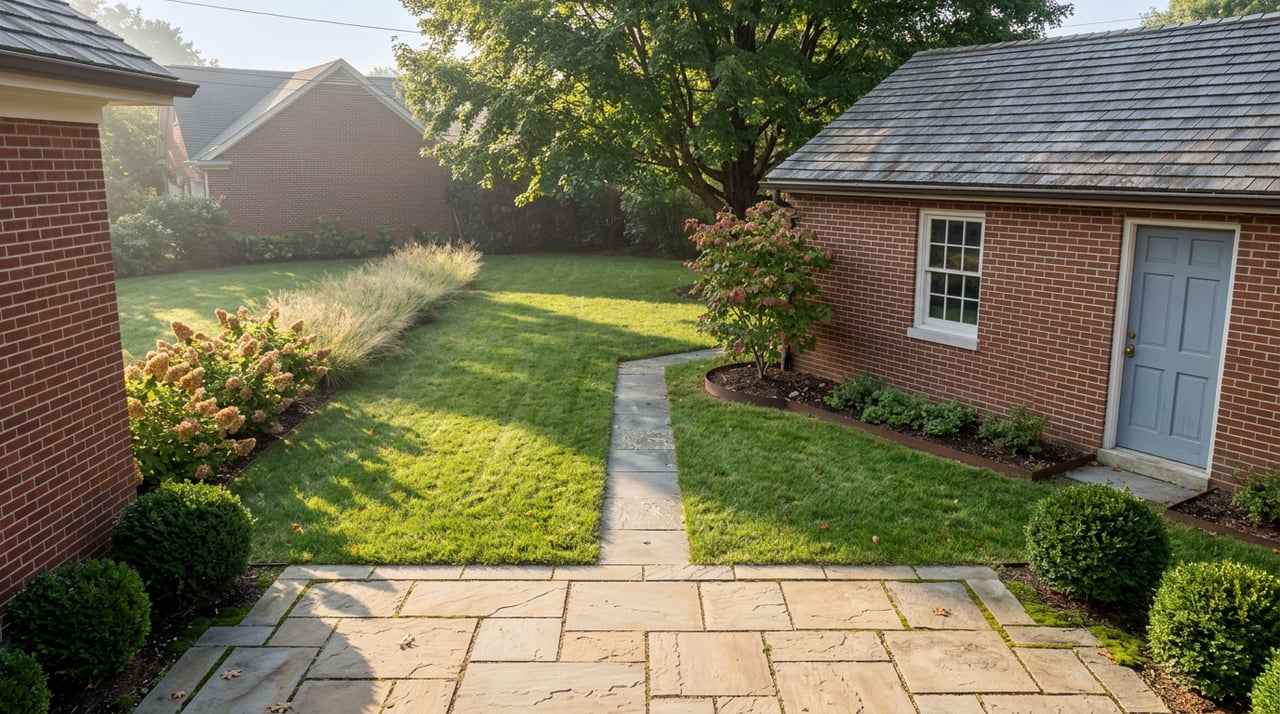
The Burlington Backyard Suite Everyone's Talking About Has a Test Most Owners Never Run
September 3, 2026
September 3, 2026
A homeowner in Aldershot called a contractor last spring about turning her detached garage into a rental suite. She'd read the headlines: Burlington now allows four units per lot, up from one. She had a tape measure, a Pinterest board, and a rough idea of what a basement apartment might rent for. What she didn't have, and what nobody had told her to check first, was whether her street even qualified.
It didn't. Her lot ran on a private well and septic system, and under the city's current rules, that alone ends the conversation before zoning, setbacks, or parking ever come up.
That's the part of Burlington's additional residential unit story that gets skipped in most of the coverage. The zoning changed. The math that made it worth acting on for early movers has quietly changed too, and not in the direction most people assume.
Burlington's Zoning By-law 09-2026 lets most urban residential lots carry up to three additional residential units alongside the main house, for four units total. That's the headline number, and it's accurate. It applies across the city's Low-Rise Neighbourhood zones, the LN1 through LN6 designations that cover most of Burlington's detached, semi-detached, and townhouse streets, and it builds on an Official Plan amendment the city approved in January 2025.
Where it gets interesting is what "eligible" actually means once you get past the headline.
Before setbacks, before parking counts, before anyone draws a floor plan, Burlington's rule asks one question: does the lot have both municipal water and municipal sewer service? If either one runs on private infrastructure, a well, a cistern, a septic field, the property doesn't qualify for an additional unit under this by-law. Full stop.
This isn't a footnote. It's the first filter, and it disqualifies a meaningful slice of Burlington property before a homeowner ever reaches the fun part of the decision, the part about floor area and rental income. If you're comparing a lot in central Burlington against one on the city's edges or in a rural pocket, this is the question to ask before you ask anything else.
Here's the part that trips people up most, because it's changed twice in under two years and the online guides haven't caught up.
The city ran an ARU Incentive Program that offered forgivable loans, up to $95,000 for a new detached unit and up to $70,000 for an interior or attached one, provided the owner kept rent at an affordable level for ten years. There was also a one-time $15,000 grant for owners legalizing an existing, non-compliant suite with no affordability strings attached.
That program closed to new applicants on October 1, 2025.
A separate, narrower benefit is still running. The city's municipal fee waivers, covering zoning clearance and building permit costs for new ARUs, remain available through December 31, 2026, based on available funding. That's real money, but it's a fraction of what the forgivable-loan program offered, and it doesn't help with construction costs the way a $95,000 loan did.
| Program | What it covered | Status as of August 2026 |
|---|---|---|
| ARU forgivable loans (detached) | Up to $95,000, 10-year affordability term | Closed to new applicants Oct. 1, 2025 |
| ARU forgivable loans (interior/attached) | Up to $70,000, 10-year affordability term | Closed to new applicants Oct. 1, 2025 |
| Legalization grant | Up to $15,000, no affordability requirement | Closed to new applicants Oct. 1, 2025 |
| Municipal fee waivers | Zoning clearance and building permit fees | Open through Dec. 31, 2026, funding-dependent |
If you're running numbers on a Burlington property right now, the fee waiver is the only city money still on the table. Anyone building today is largely financing the project the same way they'd finance any other renovation, and that changes the return calculation compared to what an owner who moved before October 2025 was working with.
Assuming a lot clears the water-and-sewer test, the by-law spells out a specific envelope for a detached unit, the kind that goes in a backyard rather than a basement:
That parking formula is worth sitting with for a second. It means the first unit an owner adds costs nothing in parking requirements, but stacking a second or third means finding another spot on a lot that may already be tight. For anyone comparing a property specifically for its multi-unit potential, that's the number that determines whether "three units" is a real possibility or a number that only works on paper.
The by-law didn't arrive without pushback in the other direction. During the public consultation process, developers Albert Faccenda and Lloyd Ripani, representing Coral Gables Homes Ltd., asked the city for something the final rules don't allow: the ability to sell individual additional residential units as separately owned condos, rather than keeping them as rental units tied to a single title.
The city didn't take that route in the version that passed. But the ask itself tells you something about where this is heading. There's a builder-side appetite to treat these units less like rental add-ons and more like standalone housing product, sold off individually. Whether that becomes possible in a future amendment is genuinely open, but it's not the rule today, and anyone budgeting around a future resale-by-unit strategy should treat that as speculation, not a plan.
Does this apply to condos and townhouses the same way it applies to detached homes? The by-law's unit allowances are built around single detached, semi-detached, and townhouse properties on their own lot. A townhouse on a shared or freehold lot with municipal water and sewer service can potentially qualify, but a condo unit governed by a condo corporation is a different situation entirely, since the corporation's own rules and shared infrastructure come into play first.
If I already have an illegal basement apartment, is the $15,000 legalization grant really gone? For new applicants, yes, that program closed October 1, 2025. Legalizing an existing unit is still possible under the standard permit process, but without that specific grant offsetting the cost.
Does the fee waiver running through 2026 cover construction costs? No. It covers zoning clearance and building permit fees only, not materials or labor. It's worth having in your budget, but it won't change the math the way the forgivable loans did for owners who applied before the deadline.
The rule that gets repeated is "Burlington allows four units now." The rule that actually decides whether that's useful to you is whether your specific lot has municipal water and sewer, whether the footprint leaves room for the setbacks and parking the by-law requires, and whether you're financing the build with fee waivers alone or full construction costs. Those three questions matter more than the headline number, and they're the ones worth answering before a property goes under contract, not after.
If you're weighing a Burlington property specifically for its rental-suite potential, or trying to figure out whether a lot you're already watching would even clear the water-and-sewer test, Team Durrani can walk through the specifics with you before you commit to anything. Schedule a Consultation and bring the address. We'll help you figure out what the lot can actually support, not just what the zoning map says in general.
Stay up to date on the latest real estate trends.
Whether you're buying, selling, or investing, Team Durrani is ready to provide the expertise and dedication you deserve. Contact us today to begin a professional, transparent, and results-driven real estate journey.
Team Durrani
Address
17-1075 North Service Rd. W
Oakville, Ontario, L6M 2G2