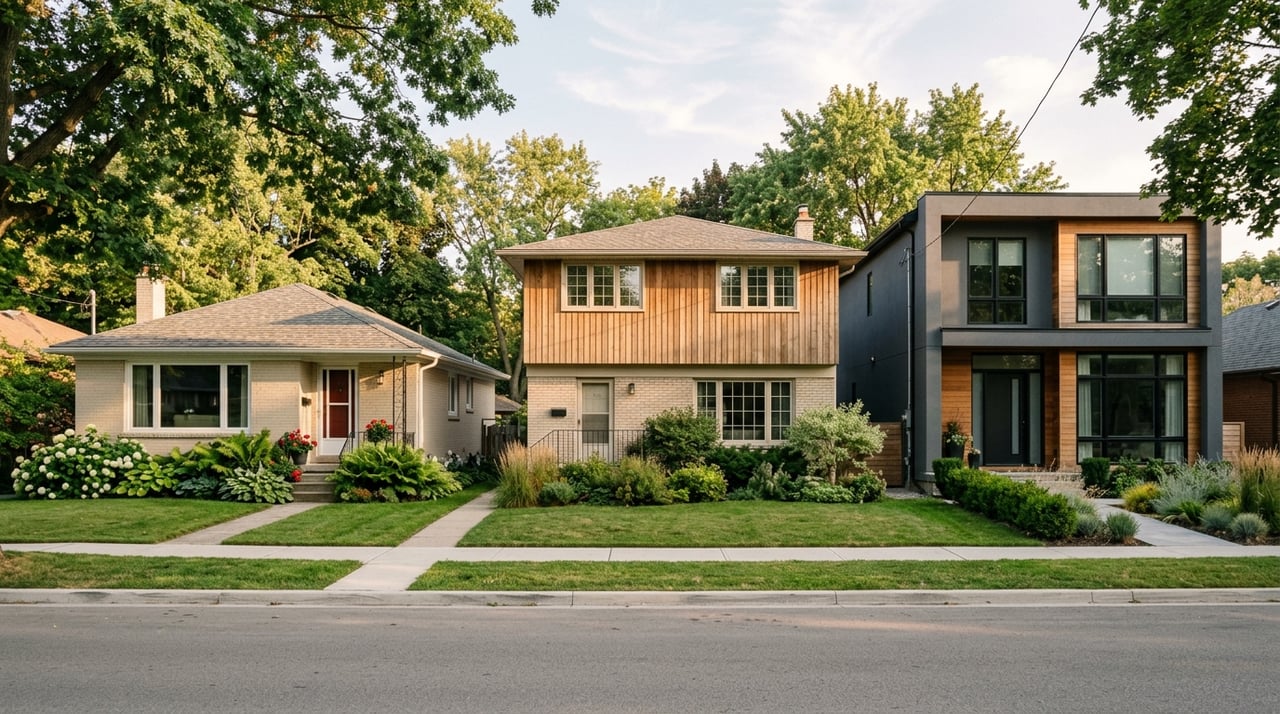
Comparing Etobicoke Housing Types, From Bungalows to New Builds
June 11, 2026
June 11, 2026
Wondering what kind of home actually fits your life in Etobicoke? That question matters more here than many buyers expect, because Etobicoke is not just one housing story. You will find classic post-war detached homes, condo towers in key pockets, townhouses, and newer builds that come with very different upkeep, costs, and future potential. This guide breaks down the main housing types in Etobicoke so you can compare them with more clarity and move forward with confidence. Let’s dive in.
Etobicoke grew quickly after the Second World War as a modern suburb, with broad roads, separate residential and commercial areas, large driveways, and garages shaping the area’s design. That history still shows up in the housing stock today, especially in the many low-rise residential streets that buyers associate with older parts of Etobicoke.
At the same time, Etobicoke is not only detached homes. Toronto’s planning framework for Neighbourhoods allows a range of lower-scale housing types, including detached homes, semi-detached homes, duplexes, triplexes, townhouses, and walk-up apartments of four storeys or less. Higher-scale apartments are not permitted inside those Neighbourhood areas, which helps explain why much of interior Etobicoke remains low-rise while denser housing appears in specific nodes.
The local housing stock also skews older. In the Etobicoke York community council area, 28.5% of dwellings were built in 1960 or earlier, and 36.4% were built from 1961 to 1980. That means a large share of homes you see today were built in an earlier era, often with layouts, lot sizes, and maintenance needs that differ from newer GTA communities.
When many people picture Etobicoke, they picture detached homes first. That makes sense, because the area’s post-war growth created many ground-oriented neighbourhoods where detached houses remain a major part of the streetscape.
In practical terms, older detached homes in Etobicoke often include bungalows and split-level styles. These are best understood as common architectural types rather than formal census categories, but they are a realistic part of the local market because of the age and development pattern of the area.
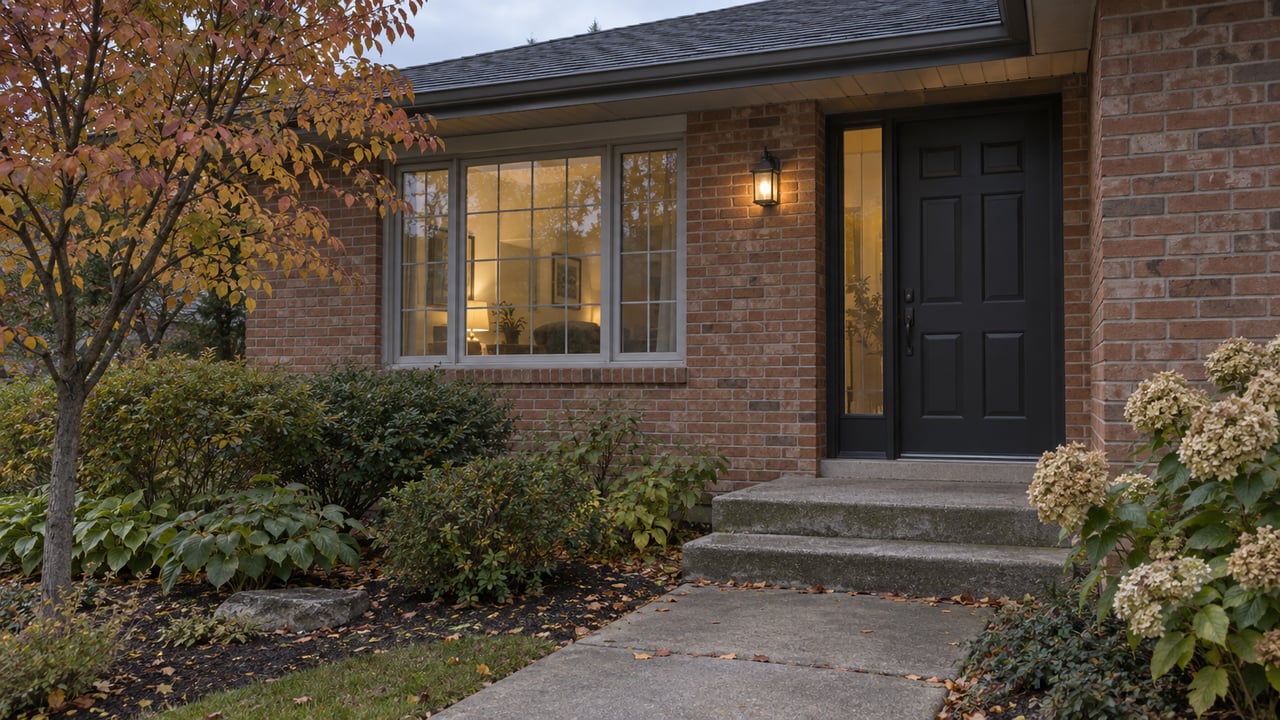
A bungalow in Etobicoke can appeal to you for a few different reasons. You may like the simpler main-floor layout, the larger lot feel, or the chance to renovate over time instead of buying all your finished space upfront.
For some buyers, the biggest attraction is flexibility. A bungalow may offer room to update the interior, finish a basement, redesign the roofline, or explore an addition, depending on the lot and zoning rules.
In Etobicoke, renovation potential is often tied to the lot as much as the house itself. Former Etobicoke zoning standards for many interior single-family lots show minimum lot frontage typically ranging from 12.0 to 15.0 metres, maximum lot coverage of 33%, and rear-yard setback requirements generally equal to 25% of lot depth, with a minimum of 7.5 metres.
That means your ability to expand may depend on frontage, depth, side-yard setbacks, and the overall form of the home. In other words, a house that looks expandable at first glance may still face design limits, while another lot may allow more practical options.
Detached ownership gives you direct control, but it also gives you direct responsibility. Owners are generally responsible for the full house, including the roof, exterior walls, lawn, garden, driveway, and garage.
That can be a good fit if you want independence and long-term renovation upside. But if you prefer more predictable exterior maintenance, a detached home may feel more hands-on than a condo or condo townhouse.
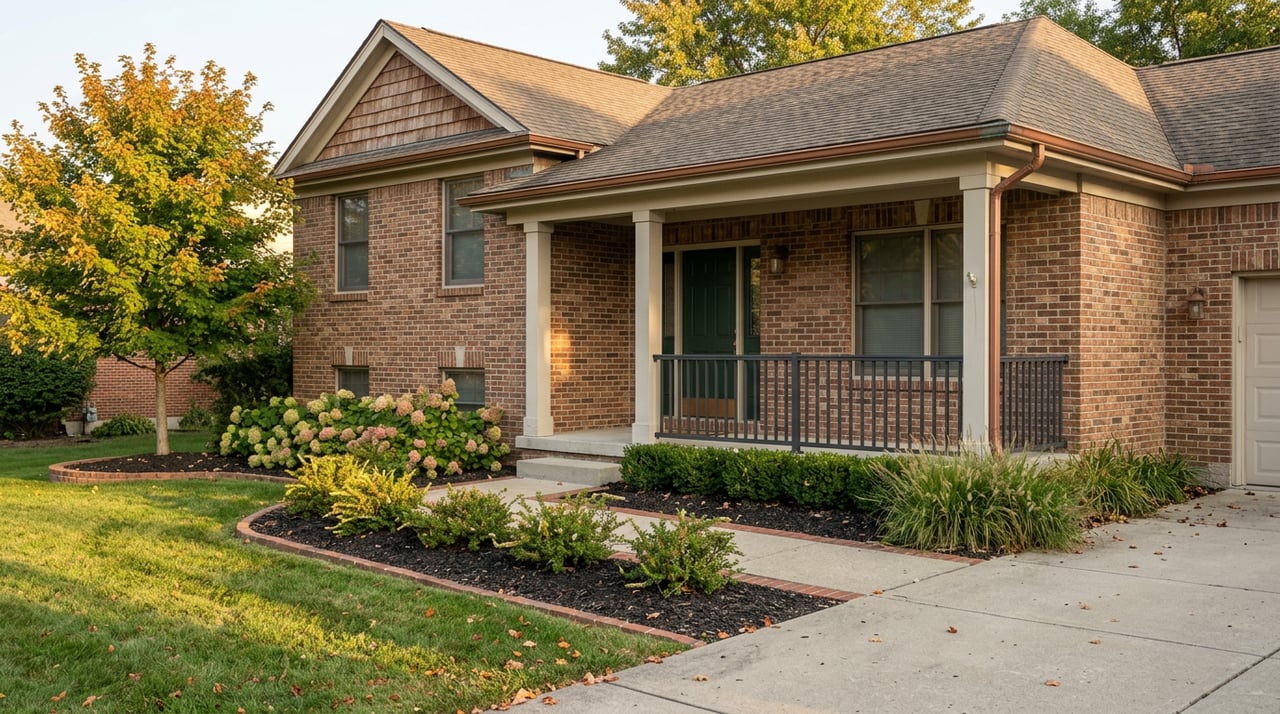
Split-level and similar mid-century homes are part of Etobicoke’s mature housing character. If you are shopping in older pockets, you may come across homes with multi-level layouts, larger setbacks, and older construction features that reflect how suburban homes were designed in the post-war decades.
These homes can offer more separation between living spaces than a typical bungalow. They may also appeal to buyers who want a detached format but are open to updating interiors, improving flow, or modernizing major systems over time.
The key is to look past style alone. In Etobicoke, the real decision is often about how much work you want to manage, what the lot allows, and whether the home fits your long-term plans.
Townhouses can sit in the middle of the market in a useful way. If you want more space and privacy than a typical condo unit but do not want the full maintenance load of a detached home, a townhouse may give you that balance.
Etobicoke includes various lower-scale housing types, and townhouses are part of that mix. You may find them in low-rise settings or within condominium structures where some exterior elements are shared and maintained by the condo corporation.
One of the biggest differences with townhouses is not always how they look from the outside. It is how ownership and maintenance are structured.
In a townhouse condominium or house condominium, exterior walls, windows, lawns, gardens, and driveways may be common elements. That means some repairs or upkeep items that would be your direct responsibility in a detached house may instead be handled through the condo corporation.
A townhouse may come with monthly condo fees if it is part of a condominium. Those fees help pay for upkeep of common property, and a portion may go to a reserve fund for major repair and replacement.
This can reduce day-to-day exterior maintenance on your end, but it adds a recurring monthly cost. So if you are comparing a townhouse to a detached home, it is important to look at the full carrying-cost picture rather than focusing only on the mortgage payment.
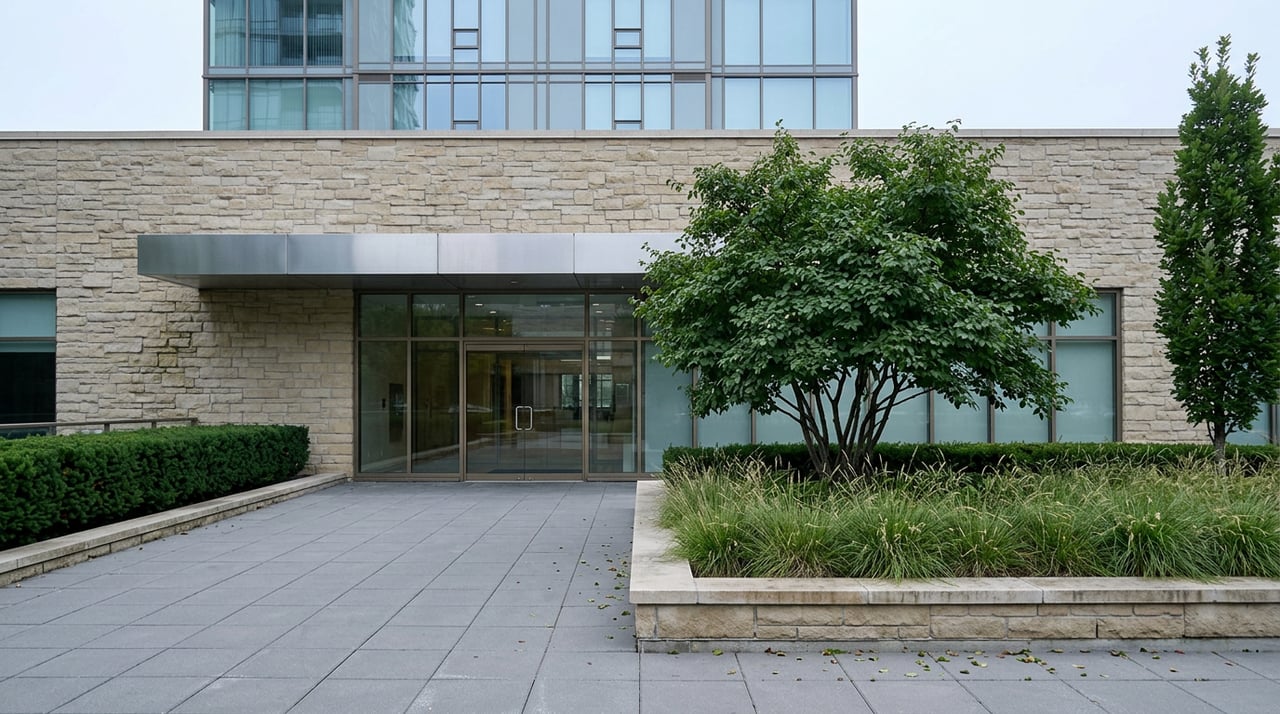
Condos are a major part of Etobicoke’s housing mix, especially in denser areas. If you want a lower-maintenance lifestyle, newer building amenities, or a location closer to key transit and apartment-heavy corridors, this category may be worth a closer look.
The numbers make that clear. In Etobicoke Centre, 48.2% of occupied private dwellings are single-detached houses, while 39.4% are apartments in buildings of five storeys or more. In Etobicoke-Lakeshore, 28.3% are single-detached homes, 46.7% are apartments in buildings of five storeys or more, and 16.9% are apartments in buildings under five storeys.
If you are searching for condo options, Etobicoke Centre and Etobicoke-Lakeshore are the clearest places to focus. These areas show a much stronger apartment presence than the interior low-rise streets many people picture when they think about traditional Etobicoke.
That difference matters because it affects not just what you can buy, but also what kind of daily ownership experience you will have. In these denser areas, you are more likely to compare unit size, building age, condo fees, and reserve fund considerations than lot frontage or addition potential.
With a condo, the corporation is responsible for maintaining the common elements, while each owner maintains the unit itself. That can mean less direct responsibility for exterior items, but it also means you need to understand fees, building rules, and how shared components are managed.
For many buyers, that tradeoff is worthwhile. You may gain easier upkeep and a simpler lifestyle, but you should still review the monthly costs and ownership structure carefully before making a decision.
If your goal is a newer home, it helps to know where newer construction is concentrated. In Etobicoke, newer housing is not spread evenly across the district.
The strongest concentration of newer dwellings appears in the more apartment-heavy parts of the market. In Etobicoke-Lakeshore, 11.3% of dwellings were built from 2016 to 2021, compared with 3.2% in Etobicoke Centre.
In Etobicoke, newer construction is more visible in condo and apartment projects than in classic interior low-rise neighbourhoods. That is partly because Toronto’s planning framework protects many Neighbourhood areas from higher-scale apartment replacement.
So if you are picturing a brand-new detached home on a quiet interior street, your options may be more limited than if you are open to newer condos in denser nodes. This is one reason it helps to match your search to the local planning pattern, not just your wish list.
The best way to compare Etobicoke housing types is not just by appearance. You should also compare ownership structure, maintenance responsibility, monthly carrying costs, and future flexibility.
Here is a simple way to think about it:
| Housing type | Best known for | Main upside | Main tradeoff |
|---|---|---|---|
| Older detached home | Space, lot presence, renovation potential | More control and possible long-term customization | Higher direct maintenance responsibility |
| Split-level or bungalow | Mature low-rise living | Flexible layouts and update potential | Renovation feasibility depends on lot and zoning |
| Townhouse | Middle ground between condo and house | More space with potentially shared upkeep | May include condo fees and shared-element rules |
| Condo or apartment | Lower-maintenance ownership | Shared exterior upkeep and denser location options | Monthly fees and building governance matter |
| Newer condo build | Modern finishes and newer systems | More recent construction in active nodes | Less common in interior low-rise areas |
If you are deciding between categories, ask yourself a few simple questions:
Etobicoke and Mississauga share suburban roots, but they are not evolving in exactly the same way. Mississauga also grew as a largely low-density, low-rise suburb, and its 2025 Housing Needs Assessment says single-detached homes still occupy roughly 70% of the city.
Where the difference shows up is in policy direction. Mississauga is more explicitly pushing for additional low-rise housing options, including the ability for owners of detached, semi-detached, or townhome properties to build up to two additional residential units or a fourplex in certain cases.
Etobicoke, by contrast, already has a mature mix of older detached streets, condo corridors, and apartment-heavy nodes. For buyers comparing both markets, that means Etobicoke often feels like a more layered mix of established housing forms, while Mississauga is more actively broadening its low-rise housing menu.
There is no single “best” housing type in Etobicoke. The right fit depends on how you want to live, how much maintenance you want to manage, and whether you value lot potential, lower exterior responsibility, or newer construction.
If you want space and flexibility, an older detached home or bungalow may stand out. If you want balance, a townhouse may be the better fit. If you want simpler upkeep and newer building stock, condos in Etobicoke Centre or Etobicoke-Lakeshore may deserve the closest look.
The key is to compare homes based on the ownership experience, not just the floor plan. If you want help narrowing down which Etobicoke housing type fits your goals, Team Durrani can help you evaluate your options with a clear, practical plan.
Stay up to date on the latest real estate trends.
Whether you're buying, selling, or investing, Team Durrani is ready to provide the expertise and dedication you deserve. Contact us today to begin a professional, transparent, and results-driven real estate journey.
Team Durrani
Address
17-1075 North Service Rd. W
Oakville, Ontario, L6M 2G2