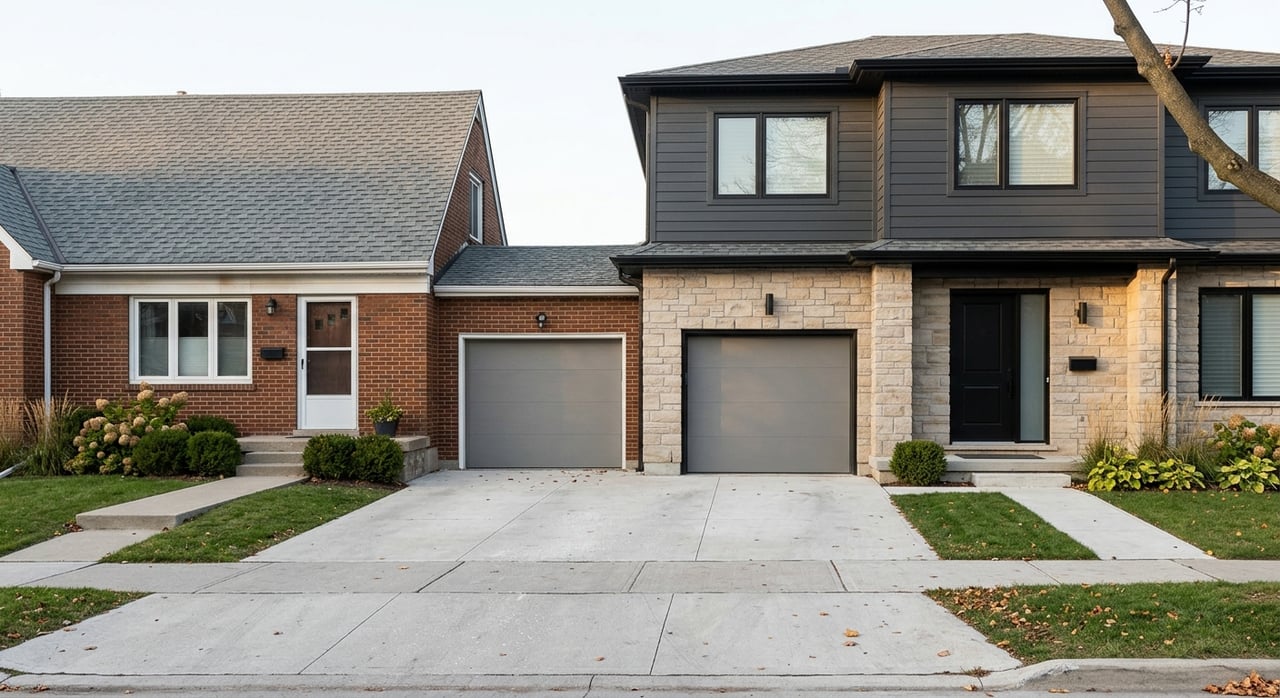
Living In North Versus South Burlington
July 9, 2026
July 9, 2026
Choosing between north and south Burlington is not just about picking a spot on the map. It is really about deciding how you want to live day to day, how you plan to commute, and what kind of home setting fits your routine. If you are trying to narrow your search, this guide will help you compare housing, lifestyle, transit, and amenities so you can focus on the part of Burlington that makes the most sense for you. Let’s dive in.
In Burlington, the north versus south conversation is shaped by how the city has grown. According to the city’s planning framework, most urban development has taken place south of Dundas Street, while the northern half has kept more of a rural character with limited residential development along roads and existing settlement areas.
That means this is not a perfect split with one hard boundary. In practical terms, south Burlington feels more built out and urban, while north Burlington generally feels lower density, closer to escarpment lands, and more spread out.
South Burlington is where you see more of the city’s urban pattern. This area includes established residential neighbourhoods, downtown and waterfront destinations, and the strongest concentration of transit connections.
If you picture Burlington’s lakefront identity, this is usually the part of the city people mean. Downtown Burlington is described by the city as the heart of Burlington, with shopping, dining, cultural spaces, diverse businesses, residential neighbourhoods, and a waterfront setting.
South Burlington offers a broader housing mix than the north. City land use policies support low-density housing like detached and semi-detached homes, medium-density options like townhouses and stacked townhouses, and higher-density homes such as apartments and other attached housing in areas close to frequent transit.
For you as a buyer or renter, that usually means more variety in home styles. If you want to compare condos, townhomes, and detached homes in one part of the city, the south gives you more starting points.
South Burlington is often the better fit if you want more activity close by. The waterfront and downtown area bring together restaurants, parks, events, trails, and everyday conveniences in a way that supports a more walkable routine in select pockets.
The city’s Downtown Waterfront includes Brant Street Pier, Spencer Smith Park, Discovery Landing, and Beachway Park. Beachway Park alone offers lakeside trails, sandy beach access, and a playground, which adds to the south side’s strong outdoor appeal.
If commute flexibility matters, south Burlington has a clear advantage. Aldershot GO, Burlington GO, and Appleby GO are all within Burlington, and each connects with Burlington Transit.
Downtown Burlington is also directly served by Burlington Transit routes 4 and 10. The city is planning future growth around the Aldershot, Burlington, and Appleby GO major transit station areas, which reinforces the south side’s role as Burlington’s most transit-connected area.
North Burlington offers a different experience. The city describes the northern half as retaining a rural character, with limited residential development outside settlement areas and road-based development patterns.
This side of Burlington is often a better fit if you want a quieter setting, lower-density surroundings, and easier access to escarpment-oriented parks and trails. It tends to work best for households that are comfortable relying more heavily on a car.
North Burlington generally feels less dense than the south. Because of rural planning rules and escarpment-sensitive land, residential development is more limited across much of the north side.
That said, not every part of north Burlington feels the same. The Alton community is identified as the city’s last major greenfield area and is planned as a mixed-use area with a transit corridor and higher-density housing in its centre, so some edge areas in the north can feel newer and somewhat more compact than the broader rural north side.
North Burlington leans more toward nature access than waterfront activity. If you enjoy trails, natural areas, and a quieter pace, this side of the city may line up better with your goals.
City View Park includes trails and natural restoration areas, while Lowville Park offers organized and self-guided activity space, renewed picnic areas, and accessible pathways. The city also highlights parks like Kerncliff Park and Lowville Park in its trail system, and nearby Bronte Creek Provincial Park adds more options for hiking, camping, and seasonal recreation.
North Burlington has transit access, but the network is thinner than in the south. Route 6S and Route 52 serve the Dundas and Highway 407 Park and Ride, giving commuters another option at the north edge of the city.
Still, the overall pattern is more car-friendly than car-light. If most of your daily trips involve driving, north Burlington may feel practical. If you want easier access to rail and local transit, south Burlington is usually the simpler fit.
The best choice often comes down to how you live from Monday to Friday, not just what looks good on a weekend visit. A home can check all the boxes on paper but still feel wrong if the commute, parking, or nearby amenities do not match your routine.
Here is a simple side-by-side view:
| Factor | South Burlington | North Burlington |
|---|---|---|
| Overall feel | More urban and built out | More rural and lower density |
| Housing mix | Detached, semis, townhomes, condos, apartments | More limited residential areas, generally lower density |
| Transit access | Stronger GO and local transit connections | Thinner transit network, more car-oriented |
| Outdoor focus | Waterfront parks, downtown trails, lake access | Escarpment parks, trails, natural areas |
| Best for | Buyers or renters wanting variety and transit options | Buyers or renters wanting quieter surroundings and nature access |
If you are unsure where to start, ask yourself a few practical questions. These tend to reveal your best-fit area faster than browsing listings at random.
How do you get to work most days, and how much flexibility do you need? If GO access or local transit matters, south Burlington is usually the more logical place to begin your search.
If you drive most of the time and do not mind more distance between destinations, north Burlington may feel just as workable. Your commute habits should shape your map before anything else.
If you want a condo or townhome lifestyle, south Burlington is the more obvious starting point. Downtown, lakefront-adjacent areas, and transit corridors align more closely with that kind of housing mix.
If you are leaning toward a detached home or a lower-density setting, north Burlington is worth a closer look. That does not mean every home there is rural in feel, but the overall pattern supports more space and a quieter atmosphere.
This is one of the clearest decision points. If you picture walks near the lake, downtown outings, festivals, and easy access to waterfront parks, you will likely be drawn south of Dundas.
If you picture trail access, parkland, and a calmer setting near escarpment landscapes, north Burlington may fit better. Neither is better overall. It depends on what feels like home to you.
How often do you want to walk to errands, and how many vehicles does your household need? South Burlington can make a more car-light lifestyle possible in the right pockets, especially near downtown and transit nodes.
North Burlington usually makes more sense if you expect to drive for most errands and want day-to-day convenience built around the car. That is not a downside if it matches your routine.
If you are starting your home search, it helps to filter Burlington by lifestyle first and listings second. That keeps you from wasting time on homes that look appealing online but do not fit your real routine.
A simple strategy looks like this:
At Team Durrani, we find that the best home decisions come from matching the property to your full lifestyle picture, not just the price point or square footage. When you compare Burlington this way, your search becomes clearer and far less stressful.
If you are weighing north versus south Burlington and want guidance tailored to your commute, budget, and long-term goals, connect with Team Durrani for a personalized plan.
Stay up to date on the latest real estate trends.
Whether you're buying, selling, or investing, Team Durrani is ready to provide the expertise and dedication you deserve. Contact us today to begin a professional, transparent, and results-driven real estate journey.
Team Durrani
Address
17-1075 North Service Rd. W
Oakville, Ontario, L6M 2G2