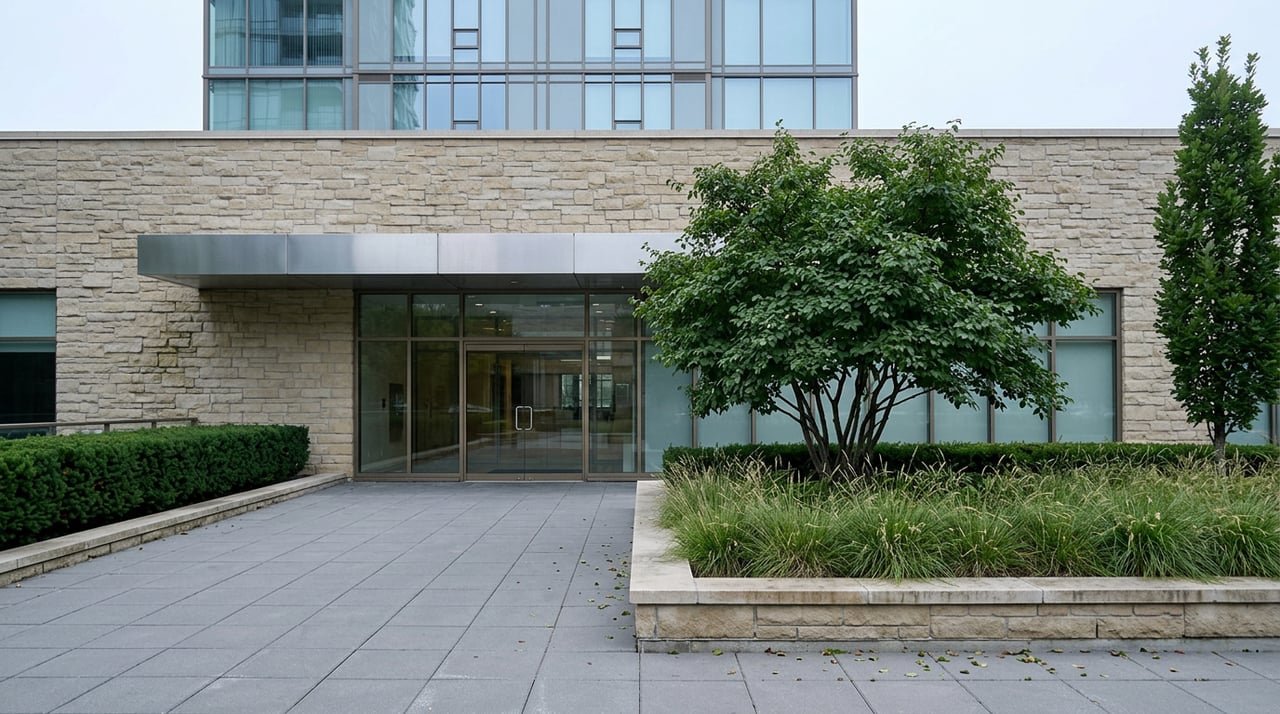
The 42-Day Clock Hiding Inside Your Oakville Condo's Status Certificate
September 24, 2026
September 24, 2026
Two buyers, the same building. One is looking at a resale unit at Distrikt Trailside on Dundas Street West. The other is looking at a nearly identical unit two floors up, same square footage, same view of the water. Both order a status certificate. Both pay the standard fee. Both hand the document to their lawyer expecting the same kind of answer.
They don't get one. One certificate reflects numbers the builder wrote down before a single owner-elected board member ever saw the corporation's books. The other reflects numbers an owner-controlled board commissioned on its own, after firing or keeping the builder's property manager and hiring its own engineer. Same address. Same finishes. Two very different pictures of financial health.
The difference has nothing to do with the building's age. It has to do with a legal clock that most buyers, and more than a few agents, don't know is running.
The instinct with new construction is that newer means safer. No thirty-year-old roof to worry about, no elevator overhaul on the horizon, no history of surprise levies. That instinct is not wrong, exactly, but it skips a step that matters more in the first few years of a building's life than almost anything else.
When a condominium registers in Ontario, the developer appoints the first board. That board runs the corporation using a first-year budget the developer wrote, tied to reserve fund contributions the developer projected before construction was even finished. The Condominium Act, 1998 requires that developer-controlled board to call a meeting of owners and hand over control once the developer no longer owns a majority of the units. Section 43 gives them 21 days to call that meeting after crossing the 50 percent threshold, and a further 21 days to actually hold it. Forty-two days, start to finish, from the moment the builder's ownership share drops below half.
Until that meeting happens, the numbers in any status certificate for that building are still the builder's numbers. After it happens, an owner-elected board takes over the corporation's agreements, its bank accounts, and eventually its reserve fund planning. The Condominium Authority of Ontario's guidance on turnover meetings lays out the full sequence, including the 25 percent quorum requirement and the paperwork the developer must hand over.
For a building like Distrikt Trailside, which began closing units in 2022 and 2023, or Berkshire Residences on Maurice Drive in Old Oakville, which closed around the same window, that 42-day clock has almost certainly already run its course by now. The Branch Condos in Palermo West sits in the same general timeframe. A building still selling units today, the way OAK & CO's four towers near Trafalgar and Dundas East are, hasn't reached that threshold yet. The status certificate on that kind of project is, by definition, still telling the builder's version of the story.
Turnover is not just a change of letterhead. Within 60 days of the meeting, the developer must hand over audited financial statements for comparison against the first-year budget. A separate performance audit, tied to Tarion warranty claims for construction deficiencies, has to happen between six and ten months after registration, with the engineer's report filed before the end of the eleventh month. The newly elected board also gets the right to review, and in many cases terminate, contracts the builder signed on the corporation's behalf, from management agreements to service contracts for the common elements.
None of that shows up in a status certificate the way a special assessment does. But it explains why the first status certificate issued after turnover often looks meaningfully different from the one issued six months earlier. The board reviewing the numbers now has its own engineer, its own accountant, and no reason to protect the builder's original projections if those projections turn out to be wrong.
Here is the practical difference for a buyer comparing two certificates from buildings at different stages:
| What the certificate reflects | Pre-turnover corporation | Post-turnover corporation |
|---|---|---|
| Reserve fund projections | Developer's original estimate from the disclosure statement | Independently reviewed, potentially revised after the board's own engineering study |
| Budget accountability | Developer responsible for first-year shortfalls under Section 75 | Owner-elected board responsible going forward |
| Contracts in place | Builder-negotiated agreements, some possibly one-sided | Reviewed by the board, with the right to terminate under Sections 111 and 112 |
| Litigation and assessment disclosure | Limited to what the developer has flagged | Reflects what the owner board has since discovered or been advised of |
A certificate from a building that hasn't turned over isn't automatically worse. But it is answering a different question than a buyer usually assumes it is answering.
Turnover timing is one variable. Building size is another, and it compounds the first one. In Oakville's boutique low-rise and mid-rise condos, common in Glen Abbey and Joshua Creek, a smaller number of owners split the cost of the same major repair that a 300-unit tower would spread much further. A roof or window replacement that barely moves the needle per unit in a large building can land as a much larger per-unit bill in a 40-unit corporation. That means the timing question, whether the reserve numbers a buyer is looking at were set by the builder or tested by an owner board, carries more financial weight in these smaller buildings than in the Dundas Street towers, simply because there are fewer owners to absorb the difference if the original projection was too low.
Buyers sometimes assume that if a status certificate doesn't mention a coming assessment, none is coming. Ontario courts have pushed back on that assumption. In a 2023 decision, Bruce v. Waterloo North Condominium Corporation No. 26, the Ontario Superior Court of Justice exempted a buyer from a $34,000 share of a $2.5 million project because the corporation had not clearly disclosed the risk in the status certificate. The court's language was direct: Section 76 requires "fulsome not minimalist disclosure," not a technically accurate certificate that leaves out the parts that matter.
That decision matters most for buildings in the window this piece is about. A corporation that just went through turnover, just hired its own engineer, and is only now discovering that the builder's reserve projections were optimistic has every incentive to disclose carefully rather than minimally. A buyer's lawyer reviewing that certificate should be reading not just what it says, but how directly it says it.
The fee for a status certificate has been capped at $100 including tax since the Condominium Act was introduced, even as the document itself has grown into a package that can run past a hundred pages. That fee has not moved. The stakes behind it have.
Before making an offer firm on a resale unit in one of Oakville's newer towers, it is worth asking your lawyer or agent one question the certificate itself won't answer directly: has this corporation had its turnover meeting yet, and if so, how recently. A certificate issued in the first year after turnover is often the first honest look at whether the builder's reserve numbers held up. That is exactly the moment worth reading closely, not glossing over because the building is new.
Does a newer Oakville condo automatically mean a safer status certificate? Not on its own. A building's age tells you less than whether it has completed its turnover meeting and whether the reserve fund numbers in the certificate came from the builder or from an owner-elected board's own review.
Who typically pays for the status certificate in an Oakville transaction? There is no fixed rule under the Condominium Act. In practice, sellers often order it early to keep a deal moving, since the corporation has 10 days to deliver it once requested and payment is made.
How long is a status certificate considered valid once it's issued? Legally, it reflects the corporation's status only as of the day it was issued. Most lawyers and lenders treat a certificate as current for about 30 days, which matters if your closing date is further out than that.
What should I ask about if a building recently changed hands from the builder to an owner board? Ask whether the new board has commissioned its own reserve fund study yet, and whether the certificate reflects updated numbers or numbers still carried over from the builder's original projections.
Reading a status certificate closely is not about finding a reason to walk away from a good building. It is about knowing which version of the story you are being told, and timing your questions accordingly. If you are weighing a resale unit in one of Oakville's newer towers, or trying to compare a Distrikt Trailside listing against something in Old Oakville, Team Durrani can walk through the certificate and the timeline with you before you waive a condition. Schedule a consultation and bring the paperwork.
Stay up to date on the latest real estate trends.
Whether you're buying, selling, or investing, Team Durrani is ready to provide the expertise and dedication you deserve. Contact us today to begin a professional, transparent, and results-driven real estate journey.
Team Durrani
Address
17-1075 North Service Rd. W
Oakville, Ontario, L6M 2G2